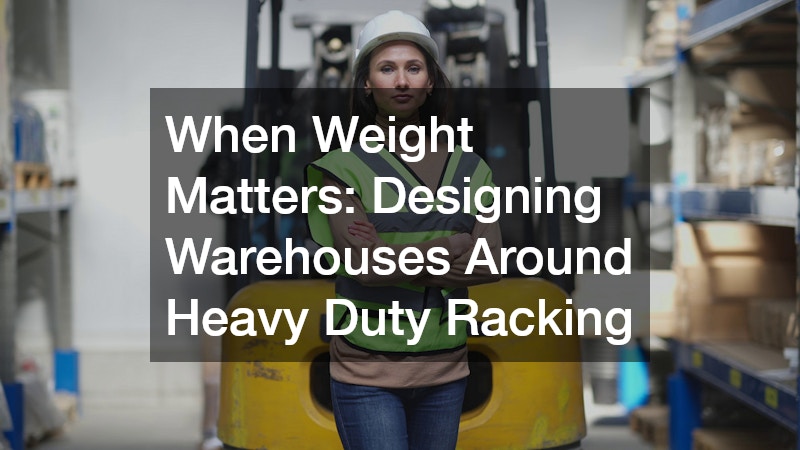
Modern warehouses are under constant pressure to store more products, move them faster, and do so safely. For operations that handle bulky, oversized, or extremely heavy inventory, standard storage systems are often not enough. Heavy duty racking plays a critical role in these environments, influencing not only storage capacity but also workflow, safety, and long-term efficiency. Designing a warehouse around heavy duty racking requires thoughtful planning, structural awareness, and a clear understanding of load demands.
Understanding Heavy Duty Racking Systems
Heavy duty racking systems are engineered to support significantly higher weight capacities than standard pallet racks. They are commonly used in industries such as manufacturing, automotive, construction materials, metal fabrication, and industrial distribution.
These systems are built with reinforced steel components, thicker beams, and stronger connectors to safely support dense loads.
Unlike light or medium duty racks, heavy duty racks are designed with precision load ratings that account for static weight, dynamic movement, and long-term stress. Choosing the right system is foundational to warehouse safety and performance.
Why Weight Capacity Shapes Warehouse Design
When inventory weight increases, warehouse design must adapt accordingly. Heavy loads affect not only the racking itself but also the building’s structure, floor integrity, and material handling equipment. Designing around heavy duty racking means considering the entire environment, not just the storage units.
Floor load capacity is a key factor. Concrete slabs must be strong enough to support concentrated point loads from rack uprights and stored materials. In many cases, engineers must evaluate slab thickness, reinforcement, and soil conditions before racking is installed.
Planning Layouts for Heavy Loads
Warehouse layout becomes especially important when working with heavy inventory. Aisle widths, rack height, and placement all influence safety and efficiency. Heavier loads often require wider aisles to accommodate larger forklifts and material handling equipment.
Designers must also consider rack orientation to distribute weight evenly across the floor. Poor layout decisions can create stress points that increase the risk of floor damage or rack failure. Strategic placement helps balance loads and maintain long-term structural integrity.
Selecting the Right Racking Configuration
There are several types of heavy duty racks, each suited to different operational needs. Selective pallet racking offers direct access to every pallet and is ideal for warehouses with diverse inventory. Drive-in or drive-through racking systems maximize storage density for high-volume, uniform products.
Cantilever racking is commonly used for long or irregularly shaped items such as pipes, lumber, or steel bars. Push-back and pallet flow systems can also be engineered for heavy loads, improving inventory rotation while maintaining strength and stability.
Integrating Material Handling Equipment
Heavy duty racking design must align with the material handling equipment used in the warehouse. Forklifts, reach trucks, and cranes all have specific clearance, turning radius, and lifting capacity requirements.
Racks must be positioned at heights and depths that match equipment capabilities. Mismatches between racking systems and equipment can lead to inefficient operations, increased damage, and safety risks. Integration planning ensures smooth movement and minimizes strain on both workers and machinery.
Safety Considerations in Heavy Duty Storage
Safety is paramount when dealing with heavy loads. Heavy duty racking systems must comply with industry standards and local building codes. Load ratings should be clearly labeled, and staff must be trained to understand and respect these limits.
Protective features such as column guards, end-of-aisle barriers, and rack anchors help reduce damage from equipment impacts. Regular inspections are essential to identify bent beams, loose anchors, or signs of stress before they become serious hazards.
Future-Proofing Warehouse Design
Designing around heavy duty racks is not just about current needs but also future growth. As businesses expand, inventory types and weights may change. A flexible racking system allows for reconfiguration without compromising safety.
Adjustable beam levels, modular components, and scalable layouts make it easier to adapt to evolving operational demands. Investing in quality racking and thoughtful design upfront can prevent costly retrofits later.
Optimizing Vertical Space Safely
Heavy duty racking enables warehouses to take advantage of vertical space, increasing storage capacity without expanding the building footprint. However, higher racks mean greater risk if not properly engineered.
Ceiling height, sprinkler systems, lighting, and seismic considerations all influence how high racks can safely go. Engineers and designers must ensure that vertical expansion does not compromise fire safety, accessibility, or structural stability.

The Role of Engineering and Professional Planning
Professional engineering plays a crucial role in warehouses that rely on heavy duty racking. Structural engineers assess load paths, floor capacity, and building limitations to ensure safe installation. Their expertise helps prevent costly mistakes and operational disruptions.
Working with experienced warehouse designers and racking suppliers ensures that systems are customized to the specific weight, size, and handling requirements of the operation.
Long-Term Efficiency and Cost Savings
While heavy duty racking systems may require a higher initial investment, they often deliver long-term cost savings. Properly designed systems reduce product damage, improve workflow efficiency, and lower the risk of accidents or downtime.
By designing warehouses around heavy duty racks, businesses create safer, more efficient environments that support productivity and growth.
Building a Warehouse Where Weight Is an Asset
When weight matters, warehouse design must rise to the challenge. Heavy duty racking is more than a storage solution; it is a foundational element that shapes layout, safety, and operational success.
With careful planning, professional engineering, and a focus on long-term needs, warehouses can transform heavy inventory from a logistical challenge into a well-managed asset that drives efficiency and reliability.